Your Enterprise Customer Will Not Wait Until Your Security Is Ready
SME takeaway
A pentest is a snapshot. A security retainer is a capability.
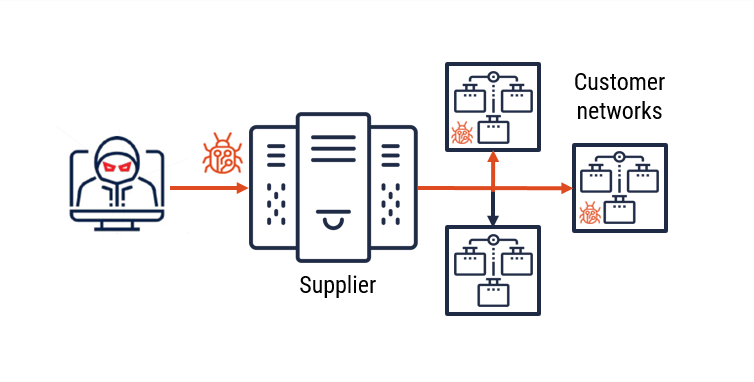
Small companies rarely fail supply-chain security because they are careless. They fail because enterprise expectations arrive faster than legacy systems and informal management processes can mature.
I recently worked with a small software company that had done something genuinely impressive.
For more than 20 years, they had built and maintained a niche application with real business value. The product was unique. The domain knowledge was deep. The business had survived because it solved a real problem.
But the world around the product changed.
First came the internet. Then cloud. Now AI. Suddenly, the question was no longer only whether the application worked.
The question became whether the company behind the application could prove it was secure enough to be trusted by larger customers.
The company had no formal ISMS yet, but enterprise customers were already asking for supplier security evidence.
That is where many small software companies get trapped.
The supply-chain trap
Large enterprise customers have CISOs, security architects, compliance teams, legal teams, procurement departments, threat hunters, and penetration testers.
Small vendors usually do not.
But once the small vendor becomes part of the enterprise supply chain, the expectations start moving in one direction only: upward.
The customer asks for:
- security documentation;
- supplier risk questionnaires;
- proof of access control;
- incident response process;
- vulnerability management;
- secure development practices;
- business continuity evidence;
- ISO/IEC 27001 alignment;
- evidence that does not yet exist.
This pressure is not imaginary. ISO/IEC 27001 is not a one-off technical checklist; ISO describes it as a standard for establishing, implementing, maintaining, and continually improving an information security management system, not around passing one heroic test.
In Europe, NIS2 has pushed supply-chain security further into board, procurement, and contract conversations. ENISA describes NIS2 as encouraging member states to address areas such as supply chain, vulnerability management, core internet, and cyber hygiene in national cybersecurity strategies. Even when a small vendor is not directly regulated like a large essential entity, the pressure can still arrive through customer questionnaires, contract clauses, audits, and supplier security reviews.
This is usually where the owner gets stuck
The small company is often not ready for the questions it is now being asked.
The application may be old. Documentation may live in people’s heads. Access rules may be based on trust and habit. There may be no formal ISMS, no clear asset list, and no agreed owner for security work.
That does not mean the company was careless. It means the company spent years doing what kept it alive: supporting customers, fixing bugs, shipping features, and protecting cash flow.
Security mattered, but it was rarely the thing that had to be finished by Friday.
Then a larger customer asks for evidence, and the work that was always “later” becomes urgent.
Why “let’s just do a pentest” is not enough
The way-too-often instinct is to buy a penetration test.
A pentest can be useful. It can find real vulnerabilities. It can validate assumptions. It can give management a clearer picture of technical risk.
But for many small companies, it is not the first thing they need.
The point
A pentest finds weaknesses. It does not build the company’s ability to manage security.
If the application is old, the processes are informal, and nobody owns security internally, a pentest can become an expensive list of problems the company already suspected.
The report may be technically correct. The findings may be important. The problem is what happens next.
Who decides which findings matter first? Who explains the risk to the owner? Who turns fixes into roadmap items? Who updates the customer without overpromising? Who checks next month whether anything actually changed?
If the answer is “we will figure it out later,” the pentest becomes a snapshot that sits in a folder.
Security needs continuity, not yearly panic
For many small companies, the realistic answer is not a full-time CISO, a compliance officer, or a security department.
They cannot afford that. Usually, they do not need it.
What they need is regular access to expertise: someone who understands security, compliance, customer expectations, legacy systems, and mostly, their business. Someone who can spend 10 or 20 hours per month helping with the next useful step instead of leaving security as a yearly panic.
That is where a retained security advisor makes sense.
Not as a luxury. Not as theatre. Not as a replacement for engineering responsibility.
As a practical bridge between the company as it is today and the evidence its customers now expect.
What a security retainer actually does
A small, predictable security retainer can turn “we should do something about security” into regular work that actually gets done.
Practical retainer work
- Answer customer questionnaires honestly
- Build a lightweight ISMS
- Map assets, data flows, and third parties
- Define security responsibilities
- Prioritize legacy application risks
- Create policies people can actually use
- Push back against unrealistic customer demands
- Translate controls into a roadmap
- Coordinate pentests at the right time
- Align gradually with ISO/IEC 27001, NIS2 or CIS Controls
The value is not only the hours. The value is continuity.
Someone remembers what was agreed last month. Someone checks whether the owner, developer, hosting provider, and customer commitments still match. Someone can say, “No, do not promise that yet,” before a sales email becomes a contractual problem.
That matters.
Small company often lose trust not because they admit “we are not certified yet,” but because they improvise, overpromise, or give inconsistent answers.
A good security advisor helps the company tell the truth clearly and still move the deal forward.
Which framework should a small company use?
There is no universal answer.
For a micro-company, CIS Controls Implementation Group 1 can be the practical starting point. It focuses on essential cyber hygiene and is designed for organizations with limited IT and cybersecurity capacity.
For a company that expects to grow, sell to larger customers, or survive another 10 or 20 years, ISO/IEC 27001 is often the better long-term direction. Not because certification is magic, but because it forces practical management habits: risks, responsibilities, controls, evidence, review, and continual improvement.
For companies within defined critical sectors, it might be NIS2.
The framework is not the point.
The habit of coming back to security every month is the point.
Security is business continuity
Security is easy to postpone until it starts threatening revenue.
By then, the company is no longer calmly improving. It is explaining downtime, data exposure, missed contract requirements, lost trust, regulatory questions, or a blocked enterprise deal.
A realistic CEO will not suddenly allocate a massive security budget unless there is already a crisis. That is why the better model is steady, predictable work.
Not all at once.
Not with a fantasy budget.
Consistently.
The bottom line
If you plan to run the company for another 10 or 20 years, cybersecurity cannot stay as an occasional project. It has to become part of how the company is managed.
A pentest gives you findings.
A security retainer gives you direction, continuity, and someone who helps turn security from panic into normal management work.
If your customers are starting to ask security questions you are not ready to answer, the worst time to start is after the questionnaire arrives.
Start small, but start continuously.
That is what a security retainer is for.
Sources
Found this useful?